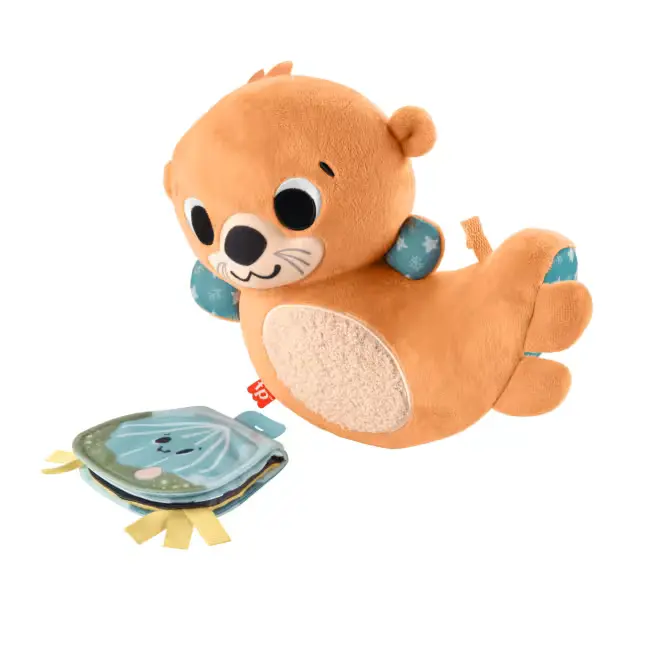
Fisher-Price 2-in-1 Soothe 'n Snuggle Otter
Soothing motion and soft music help babies relax. The otter mimics breathing, which has a calming effect.
Read ReviewCarefully selected toys that stimulate your baby's sensory and motor development. Each product is tested for safety and suitability.
Understand what your baby learns at each stage and which toys support that development
Mobiles, high-contrast cards, soft rattles, security blankets
Teething rings, sensory balls, play mats, soft squeeze toys
Stacking cups, peek-a-boo toys, activity cubes, musical instruments
Push walkers, shape sorters, board books, push-and-pull toys
How toys stimulate each skill
Babies learn about the world through seeing, hearing, touching, tasting and smelling. Toys with different textures, colors and sounds stimulate all senses.
The development of small muscle movements in hands and fingers. Grasping, holding and manipulating objects builds these skills.
Large muscle movements like rolling, sitting, crawling and eventually walking. Toys that encourage movement support this development.
From babbling to first words. Interactive toys with sounds, songs and responses stimulate language development.
Learning about cause and effect, object permanence and problem solving. Interactive toys teach babies how the world works.
Bonding with caregivers, recognizing emotions and first social interactions. Plush toys and interactive toys support this bond.
Expert-tested and parent-approved
Soothing motion and soft music help babies relax. The otter mimics breathing, which has a calming effect.
Read Review
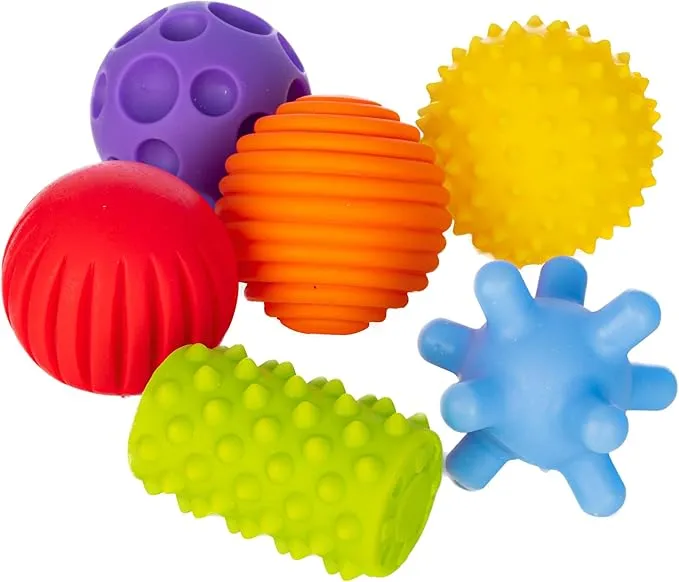
Set of various textures and colors that stimulate the sense of touch. BPA-free and safe to chew.
Read Review
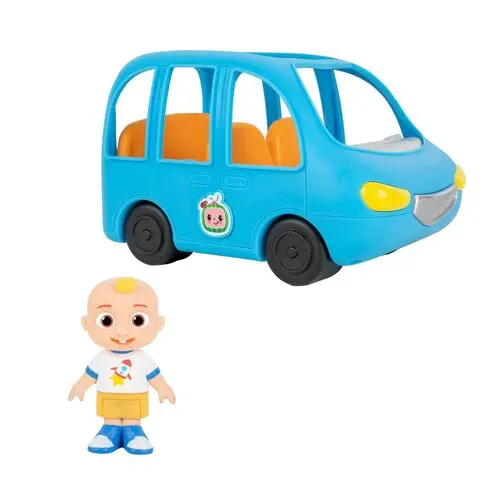
Colorful vehicle with popular CoComelon characters. Stimulates grasping, pushing and exploring.
Read Review
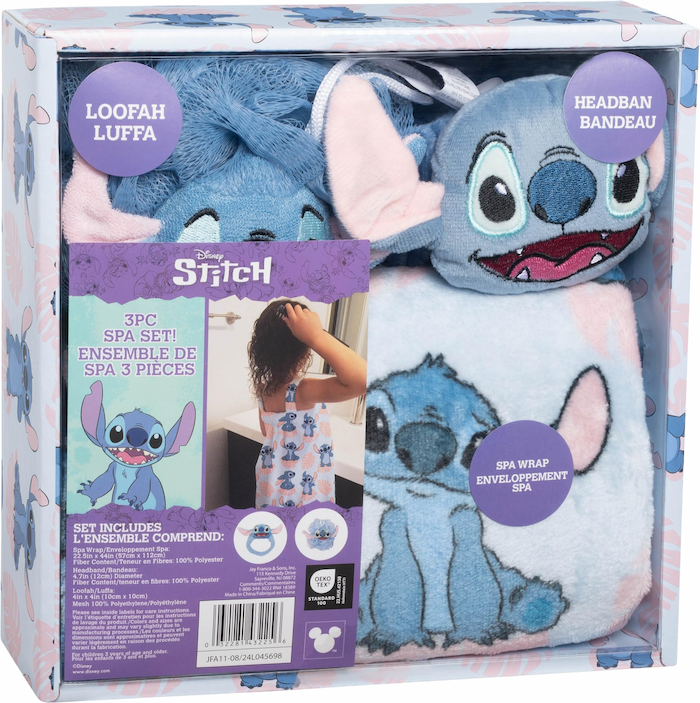
Adorable Stitch bath set with three pieces. Makes bath time fun and playful with safe materials.
Read ReviewEvery product we recommend is rigorously checked for safety. Here's what we look for:
Meets all EU safety standards
Free from harmful chemicals
Safe from choking hazards
No sharp edges that can cut
Hygienic and easy to clean
Practical advice for choosing and using baby toys
Babies become overwhelmed by too many toys at once. Offer 2-3 toys and rotate weekly. This keeps toys interesting and encourages deeper exploration.
Notice what your baby looks at and reaches for. This tells you what interests them. Choose toys that match this natural curiosity.
Play when your baby is alert and content – usually after a nap and feeding. Avoid playtime when they're tired or hungry for the best learning experience.
The best toy is you! Your face, voice and interaction are the most powerful development tools. Use toys as a means for playing together, not as a replacement.
Answers to the most common parent questions
Quality over quantity! 5-10 carefully chosen toys that stimulate different skills is enough. Too many toys can be overwhelming and distract from deep play. Rotate toys regularly to maintain interest.
Absolutely! This is called "mouthing" and is an important way for babies to explore the world. Their mouth is very sensitive and helps them understand textures and shapes. Make sure all toys are safe to chew and keep them clean.
Experts recommend avoiding screen time until 18-24 months. Simple electronic toys with lights and sounds (without screens) can be used from 6 months, but focus on hands-on, open-ended toys for the best development.
Plastic toys: wash with warm water and mild soap, or use a safe disinfecting spray. Plush toys: check the label for washing instructions – many can go in the washing machine. Wooden toys: wipe with a damp cloth. Clean toys weekly, or immediately after illness.
Young babies (0-3 months) are more interested in faces and voices than toys – that's normal! Interest in toys develops gradually. If your baby still shows no interest in objects after 4-5 months, discuss this with your pediatrician.
Discover toys for every developmental stage of your child.